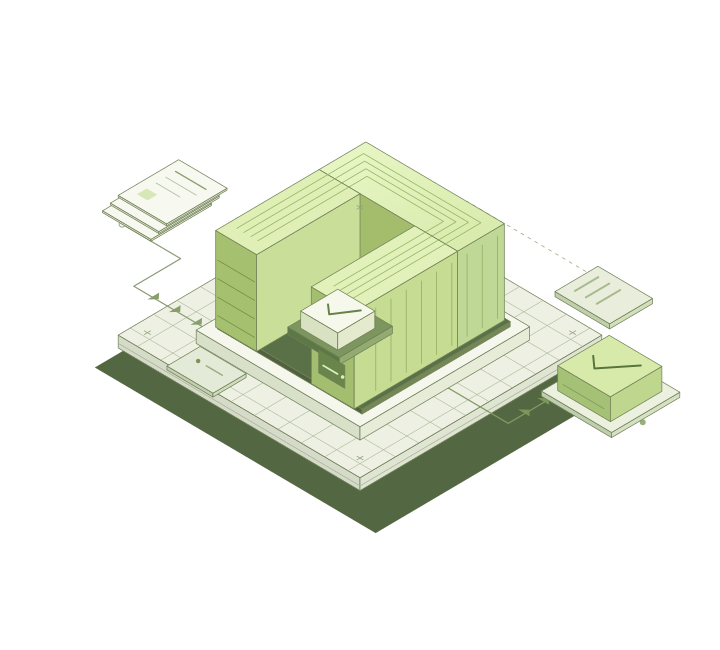
Business context
The people, rules, systems, and decisions behind the work. A shared foundation that is reviewed as the business changes.
The factory connects what your business knows to what your software needs to do. Specifications give the work a direction. Verification makes the result reviewable.
A connected way to understand, build, verify, and improve. Your people set the direction. The factory carries it through.
Turn business rules, system knowledge, and decisions into a shared foundation. Clear specifications make the intended outcome concrete before the build begins.
Our engineers and coding agents work from the same specifications. Changes stay connected to the requirements, with human decisions at the points that matter.
Check the work against the agreed requirements. Keep verification separate from implementation, and put the evidence in the hands of the person who accepts the result.
THE ACCEPTANCE RECORD
Ready for your decision ↗
Keep the context current as your business changes. Learn from real use, review what worked, and carry useful knowledge into the next workflow.
The people, rules, systems, and decisions behind the work. A shared foundation that is reviewed as the business changes.
A concrete description of the intended behavior, its constraints, and the criteria the delivered change must satisfy.
Work connected to the specification, with engineers and coding agents given the context and boundaries they need.
Checks and their results, linked to the requirements. The person accepting the work can see what was tested and what remains open.
Imagine improving an internal approval process. The goal is to route requests to the right person and make their status visible.
Who can make a request? Who can approve it? What happens when the usual approver is away? The team establishes the workflow and its exceptions before the implementation is scoped.
The specification makes those rules concrete. It defines the states, permissions, transitions, and acceptance checks for the chosen change.
The implementation is tested against those criteria, including the exception paths. Results and unresolved questions stay connected to the work the owner is reviewing.
Once the change is accepted, the team checks the agreed operational measure and updates the context when real use reveals something new.
Your people set the intended outcome and accept the result. The delivery scope defines where human decisions are needed and how exceptions are handled.
Implementation and verification are separate responsibilities. The checks inform a decision; the named owner remains accountable for accepting the work.
Meet the delivery modelWe introduce the factory through a scoped engagement, with the people and context needed to use it well.
We assess the codebase, documentation, tools, and access available for the selected workflow. The proposal identifies the integrations and checks that need to be in place.
Data access, deployment arrangements, approval points, and operational responsibilities are defined for the engagement. The scope reflects the capabilities and environment being used.
Your delivered code, specifications, and evidence remain yours. Ongoing factory access and maintenance are agreed separately, with the knowledge needed for a handover kept alongside the work.
Bring us the problem you keep coming back to.
Let’s find a better way forward.